
Case study · March 16–April 26, 2026
Goodbudget envelopes vs. our old notebook
We gave both methods the same money, same categories, and same untidy weeks. One won the daily work; the other kept the better memories.
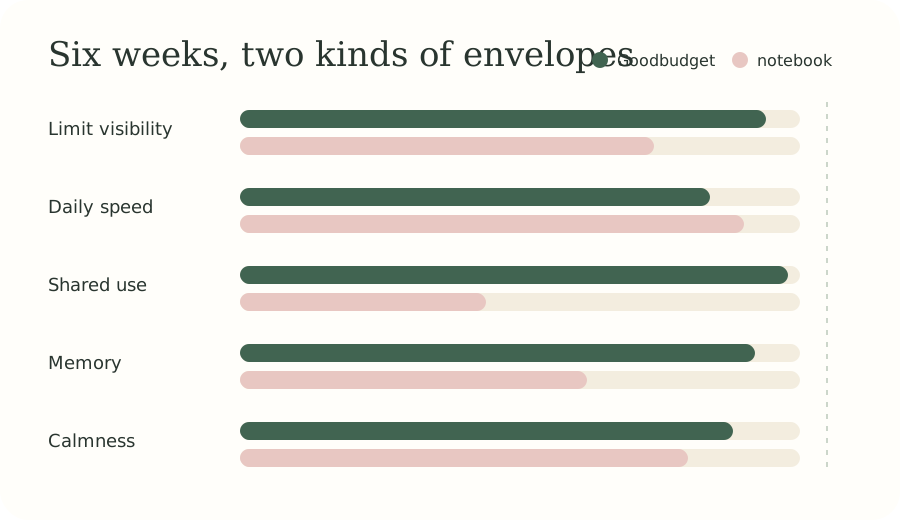
After six weeks, Goodbudget beat our notebook for current balances, shared spending, and catching mistakes; paper won for cost and thoughtful weekly review. We kept Goodbudget as the working budget and one notebook page each Sunday. The gentlest answer was not choosing one object to do every job.
How we made the test fair
From Monday, March 16, through Sunday, April 26, Theo and I entered every shared variable expense twice: once in Goodbudget Free and once on a ruled notebook spread. Rent and automatic bills appeared as planned amounts but were not copied transaction by transaction. We used the same ten monthly categories—groceries, household, transport, eating out, health, gifts, clothing, fun, personal, and buffer—plus annual envelopes for repairs and travel.
Each Sunday at 7 p.m. we compared both records with receipts and card activity. We timed routine entry, counted missing or incorrect items, and wrote a one-line mood note. This was not a laboratory. It was a small kitchen table with one person occasionally holding the receipt and the other asking whether toothpaste was household or personal.
Week one: paper felt faster because it was familiar
The notebook began with an advantage: we had used versions of it for three years. Drawing the spread took 19 minutes. Goodbudget setup took 31 minutes, including choosing envelope names and entering starting balances. During the first week, a notebook entry averaged 19 seconds; Goodbudget took 28 while we learned its rhythm.
Yet paper’s apparent speed excluded retrieval. The notebook stayed at home. A grocery-store check required a remembered balance or a message to whoever was near it. Goodbudget showed the live grocery amount on both phones. By Friday, that difference prevented a duplicate $8 purchase of coffee beans.
Weeks two and three: sharing changed the result
On March 24, Theo bought $17 of household supplies and entered them before reaching home. I saw the new balance when choosing a $14 storage box later that day and left the box. With paper, both purchases would have landed after the fact. The shared balance did not merely improve record keeping; it changed a decision at the useful moment.
Goodbudget also handled split transactions more cleanly. A $62.40 supermarket receipt included $48.10 groceries, $9.30 household, and a $5 birthday card. The app preserved one transaction with three envelope assignments. The notebook needed three lines plus an arrow to the receipt total. Neither was difficult, but the digital record was easier to audit.
Week four: both systems developed a backlog
A busy weekend created seven unentered purchases. Goodbudget’s backlog took 8 minutes to clear because dates and totals were visible in our card activity, though the Free plan did not pull those transactions automatically. The notebook took 11 minutes and one receipt had gone missing. We reconstructed a $6.80 café purchase from memory and marked it with a question mark.
This was the week we stopped romanticizing manual work. Attention can be useful, but delayed attention is just admin. Our full 42-day Goodbudget review found the same tradeoff: roughly four minutes of normal daily entry felt clarifying, while catch-up after travel did not.
Weeks five and six: the notebook remembered why
Goodbudget could tell us that dining had $23 left. The notebook margin reminded us that the April 4 lunch was with Theo’s aunt after a hospital appointment. That context mattered. On April 19, our page read, “Quiet week; use fun money on the garden opening.” The app was a better ledger, but paper held intention in our own language.
Our mood notes also exposed a pattern. App checks felt calm when we opened a specific envelope before buying. They felt fussy when we opened the dashboard merely to reassure ourselves. Notebook reviews were slower but bounded: once on Sunday, tea nearby, then closed. Tools do not create a healthy checking rhythm on their own.
| Measure | Goodbudget Free | Paper notebook | Edge |
|---|---|---|---|
| Initial setup | 31 minutes | 19 minutes | Notebook |
| Routine entry, week 6 | 17 seconds | 18 seconds | Tie |
| Missing/incorrect entries | 3 of 146 | 9 of 146 | Goodbudget |
| Live shared balances | On both phones | Only where the book was | Goodbudget |
| Six-week cost | $0 on Free | $3.50 notebook allocation | Goodbudget, narrowly |
| Personal context | Short notes | Room for decisions and memory | Notebook |
| Weekly reconciliation | 6-minute average | 10-minute average | Goodbudget |
The numbers, with their limits
We recorded 146 variable-spending transactions totaling $2,184.70. Goodbudget had three errors before Sunday reconciliation: two missed cash purchases and one wrong envelope. The notebook had nine: four delayed entries, two arithmetic slips, two wrong categories, and the uncertain café receipt. Both ended at the correct total after review.
Our timing includes active entry, not opening a phone or finding the notebook. The app was free because ten regular and two annual envelopes fit the plan limits we checked in 2026. A household needing more envelopes, more accounts, or automatic bank sync would face a different value calculation. See our 2026 budgeting app ranking for methods with deeper automation.
What we kept
On April 27, we retired the duplicate transaction log. Goodbudget remained our shared source of truth. Each Sunday, one of us now writes four things on paper: the checking balance, the tightest envelope, one purchase worth remembering, and one decision for next week. The page takes about seven minutes.
That hybrid is not a diplomatic tie. Goodbudget won the job it was designed to do. Paper stopped competing as a database and became a place to think. If you prefer a guided monthly worksheet to envelopes, our Goodbudget versus EveryDollar comparison shows another legitimate shape. If you prefer no app at all, a notebook can still work—especially for one person who reviews it consistently.
Goodbudget vs. notebook FAQ
Is Goodbudget better than a budget notebook?
It was better for our live balances, shared spending, splits, and error catching. The notebook was better for reflection and context. The better choice depends on whether you need a live shared ledger or a private planning ritual.
Can Goodbudget replace paper completely?
Yes, it can hold the working budget. We still preferred a short weekly paper review because free-form writing captured the reason behind decisions better than categories alone.
Did you use Goodbudget Premium?
No. We used Goodbudget Free with ten regular envelopes and two annual envelopes. We entered transactions manually so both systems received the same information.
Mara Bell designed the test and kept the notebook. Theo Finch checked the app totals; Iris Wren reviewed the 2026 plan-limit wording.