
Case study · January 8–February 2, 2026
Second-hand first: the room we furnished for $184
Six useful finds, 26 days of looking, one borrowed van, and the charming lamp that was not actually a bargain.
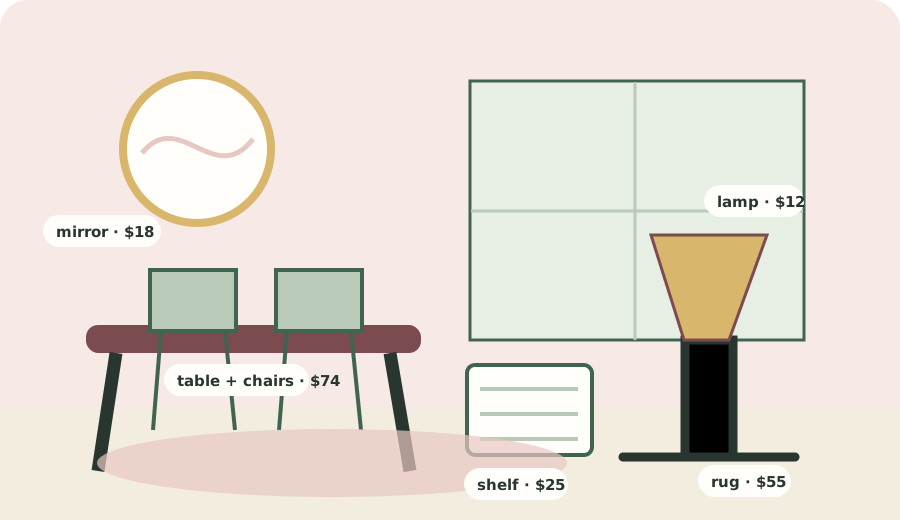
We furnished a small living-dining room for $184 all in: $164 for six used pieces, $14 in pickup fuel, and $6 for cleaning supplies and felt pads. The table, chairs, mirror, and shelf were excellent buys. We would skip the rug and rewired lamp next time because condition erased the savings.
We began with dimensions, not listings
On January 8, before opening a marketplace, we measured the room and marked doors, radiator clearance, and the 34-inch path to the kitchen. Our list was short: a table no wider than 48 inches, two dining chairs, a lamp, low shelf, mirror, and rug. We wrote maximum prices beside each and kept a $30 transport-and-cleaning allowance.
We excluded mattresses and upholstered seating. Used upholstery can be wonderful, but we could not confidently assess pests, smoke, hidden damp, or the cost of professional cleaning. We also avoided anything described as “easy fix” unless we could name the material, time, and tool before collecting it. The list stopped a cheap object from becoming a new category of need.
The table and chairs: $74 on January 12
The first strong listing was a round drop-leaf table with two mismatched beech chairs for $85. The seller accepted $74 after Theo asked about wobble and offered pickup that evening. We brought a tape measure, sat on both chairs, opened both leaves, and checked the underside for fresh dust, cracks, insects, and repairs.
One chair needed its bolts tightened. The table had a pale water mark that disappeared under a fruit bowl and, more importantly, fit with both leaves down. A comparable basic new set we found that week was $229 before delivery. We did not count the $155 difference as “saved” money; we simply spent $74 from the furnishing envelope and left the rest unassigned.
The mirror and shelf: patient, plain wins
On January 17, a neighborhood reuse shop had a 30-inch round mirror for $18. Its wood frame was scratched but solid, and the hanging wire was recently replaced. We cleaned it, touched the edge with leftover furniture wax, and used hardware we already owned. It reflects the window and makes the north-facing room noticeably brighter.
The $25 low shelf appeared on January 23 at a charity shop. It was office-gray laminate, which is nobody’s romantic second-hand fantasy, but the dimensions were exact and every joint was square. We resisted painting it. Once filled with books and baskets, the finish largely disappeared. The dull piece has become the most useful object in the room.
The lamp: $12 became $33
The January 26 lamp looked like a $12 victory: a mustard shade, heavy base, and warm pool of light. At home, its plug became hot after 20 minutes. We stopped using it and paid $21 for a local repair shop to replace the cord and socket on January 29. The repair made it safe, but the real cost became $33.
We do not regret keeping it; we regret treating electrical condition as a decorative detail. Next time we would ask whether wiring had been replaced, inspect the cord and plug closely, and price professional work before buying. A low sticker price can be an invitation to maintenance, not evidence of value.
The rug: cheap twice is expensive once
Our final purchase, on February 2, was a flatwoven rug marked down to $35 from $55 because of a stain. We thought home cleaning would handle it. Two hours, a borrowed cleaner, and several damp days later, the mark was lighter but the rug smelled musty whenever the room warmed. We gave it to a textile-recycling drop-off.
The room now uses a washable cotton rug we already owned in the bedroom, and the bedroom floor is bare. The $35 belongs in the project total because a failed purchase does not disappear when the object does. If doing this again, we would buy a new washable rug or wait for a used one whose condition was genuinely clear.
| Item | Date | Paid | Verdict after six months |
|---|---|---|---|
| Drop-leaf table + 2 chairs | Jan. 12 | $74 | Keep: solid, flexible, right size |
| Round wood mirror | Jan. 17 | $18 | Keep: brightens the room |
| Low laminate shelf | Jan. 23 | $25 | Keep: plain and extremely useful |
| Table lamp | Jan. 26 | $12 | Skip: needed a $21 repair |
| Flatwoven rug | Feb. 2 | $35 | Skip: persistent musty smell |
| Fuel, cleaner, felt pads | Various | $20 | Necessary project costs |
| Total paid | $184 | $21 later repair not included | |
The search had a cost too
Over 26 days, we spent about 4 hours browsing, 2 hours messaging, and 5 hours on pickups and cleaning. That time was manageable because the room could remain sparse. Someone furnishing before guests arrive, without a vehicle or with limited lifting capacity, faces a different calculation. Delivery and certainty can be worth paying for.
Saved searches helped only when narrow: item, maximum distance, and size words. Broad nightly browsing produced a false sense that every attractive object was a disappearing opportunity. We checked once at lunch and once after dinner, then stopped. The same pause behind our soft no-spend month made second-hand shopping calmer too.
Our second-hand-first rules now
We wait for hard furniture, frames, mirrors, shelving, tools, and ordinary kitchenware before buying new. We measure twice, ask one condition question the listing does not answer, and include transport, cleaning, repair, and disposal in the decision. For electrical items, upholstery, safety equipment, and anything hard to sanitize, “used first” becomes “condition first.”
We also give the money a category before searching. Our sinking-fund definition explains how we turned a future room cost into monthly contributions. For the broader question of which tracking method fits, our budgeting app guide begins with habits rather than shopping features.
A second-hand room does not need a charming origin story for every object. The gray shelf is allowed to be gray. The mismatched chairs are allowed to match only in height. Buying used worked when we chose for dimensions, condition, and use; it failed when hope did the inspection.
Second-hand furnishing FAQ
How long did furnishing the room take?
We searched from January 8 to February 2, 2026—26 days from the first saved search to the last pickup. The room could function while we waited, which made patience possible.
What should you avoid buying used?
Our project excluded mattresses and upholstered seating because pests, smoke, damp, and cleaning are hard to judge. We would also treat electrical items as repair candidates unless their condition is documented.
Was $184 the true total including transport?
Yes. The pieces cost $164, borrowed-van fuel cost $14, and cleaner and felt pads cost $6. A later $21 lamp repair is disclosed separately because it happened after the room was complete.
Theo Finch kept the pickup log and carried the table upstairs. Mara Bell rechecked all receipts on August 3, 2026, six months after the final purchase.